
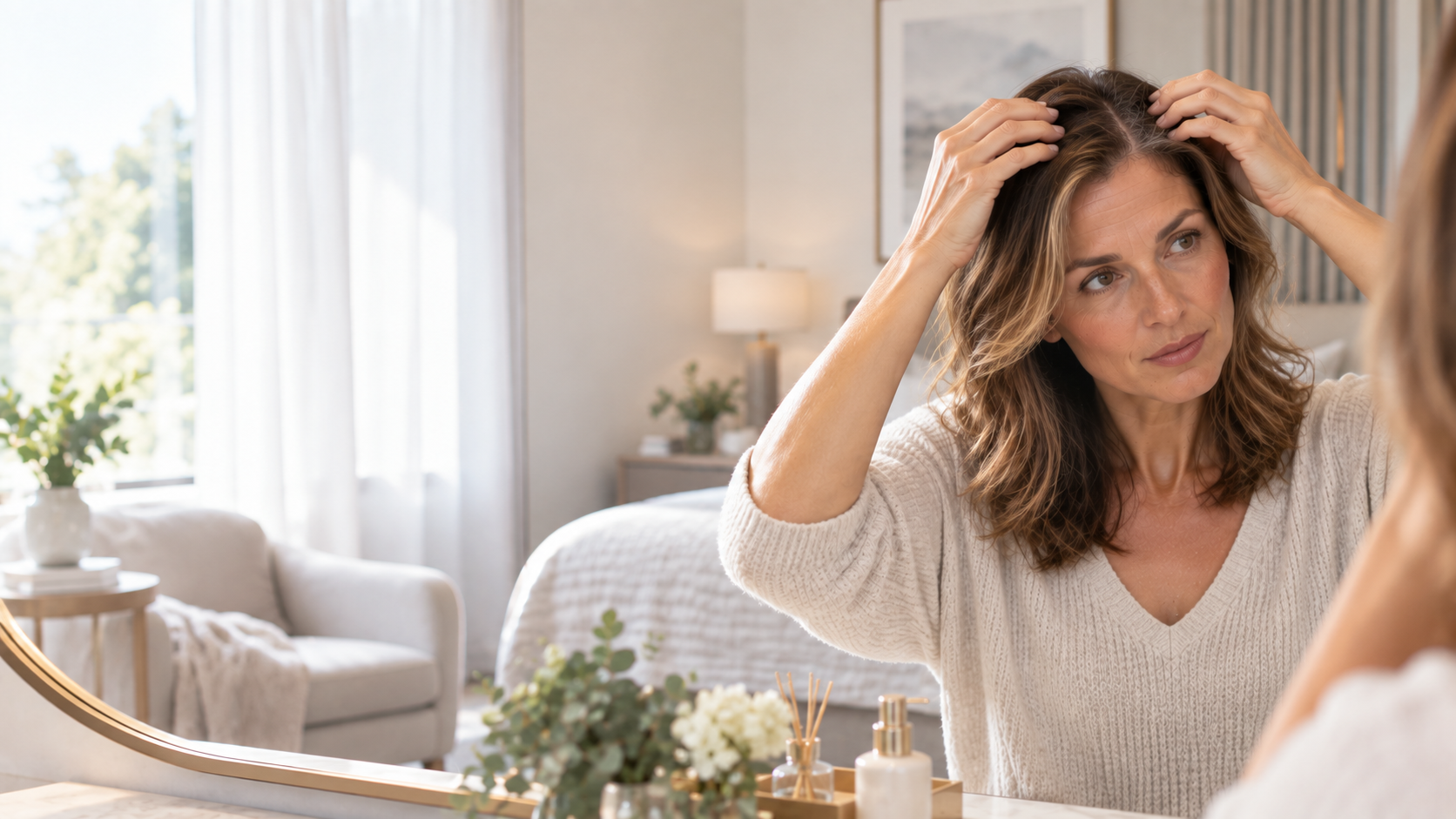
Noticing more hair in the brush or a part that seems wider than it used to be can feel unsettling. Hair thinning in women is far more common than many people realize, and it often develops gradually enough to miss at first. The good news is that there are effective, non-surgical ways to respond. At OneCareSpa in Hilton Head Island, we help women understand what is happening and build a plan to address it.
Hair thinning treatment for women is not one-size-fits-all. The right approach depends on the cause, your goals, and how far the thinning has progressed. Working with a physician-supervised team means you get a plan grounded in the actual reason your hair is changing, not a generic product.
Why Women Notice Hair Thinning
Hair naturally cycles through phases of growth, rest, and shedding. At any given time, most hairs are in the growing phase, but a smaller number are preparing to fall out and be replaced. When that cycle shifts, with more hairs resting and fewer growing, thinning becomes visible.
For many women, the first sign is a widening part or a ponytail that feels thinner than before. Others notice more hair collecting in the shower drain or on the pillow. These changes can happen slowly, which is why they are easy to overlook until they add up.
Catching the shift early is genuinely useful. The earlier you understand the cause, the more options you typically have and the more straightforward the response tends to be.
Common Causes of Thinning Hair in Women
Hormones are a frequent factor. Changes during perimenopause and menopause, after pregnancy, or with thyroid conditions can all influence the hair cycle. This type of thinning is common and, importantly, often responds to the right support.
Stress is another contributor. A physically or emotionally demanding period can push more hairs into the shedding phase at once, a pattern that usually shows up a few months after the stressful event. Nutritional gaps, especially in iron, vitamin D, and certain B vitamins, can add to the picture.
Genetics play a role too. Female-pattern hair loss runs in families and tends to appear as gradual thinning across the top of the head. Understanding which factors apply to you is the first step in choosing a treatment path.
Non-Surgical Hair Thinning Treatment for Women
Many women are relieved to learn that treatment does not require surgery. A range of non-surgical options can support the scalp and follicles directly. These may include topical treatments, in-office therapies, and targeted nutritional support, depending on your situation.
At OneCareSpa, our hair restoration approach starts with an evaluation rather than a product. We want to know what is driving the thinning so the plan can match it. You can learn more about how we approach hair restoration here.
Because every plan is individualized, some women combine a few approaches. What works for one person may not suit another, and that is exactly why a one-size-fits-all answer usually falls short.
Lifestyle and Nutrition Changes That Support Hair
Hair is made of protein, so steady protein intake gives your body the raw material it needs. Spacing protein through the day, rather than in one large meal, supports the slow, continuous work of hair growth. Lowcountry staples like seafood, eggs, and beans make this easy.
Iron and vitamin D are two nutrients worth checking. Low levels are common and can quietly contribute to thinning. A provider can review your levels and help you decide whether supplementation makes sense, rather than guessing.
Managing stress also matters. Gentle movement, time outdoors, and a consistent sleep routine all help keep the body’s stress response in check. Around Hilton Head, a walk on the beach or a quiet afternoon can be part of the plan.
What to Expect During a Hair Restoration Consultation
A consultation is a conversation, not a sales pitch. Our team will ask about your history, when you first noticed the change, and anything that may have shifted recently, from medications to stress to changes in your cycle. These details help us identify likely causes.
We will also look closely at your scalp and hair to understand the pattern of thinning. That visual assessment, combined with your history, gives us a clearer picture than either piece alone. From there, we can talk about options that are realistic for your goals.
You will leave with an understanding of what is happening and a sense of the path forward. There is no pressure to commit to anything on the spot.
Building a Long-Term Plan
Hair responds slowly, so patience is part of the process. Many treatments take months to show visible change because hair grows in cycles measured in weeks and months, not days. Setting realistic expectations protects you from discouragement.
Consistency matters more than intensity. Following a steady routine, whether it is topical care, scheduled in-office visits, or nutritional support, tends to produce better results than stopping and starting. Your provider will help you track progress in a way that is honest and encouraging.
The goal is not perfection but improvement and confidence. Many women find that simply understanding the cause of their thinning removes a layer of worry. At OneCareSpa, we are here to support you through the whole journey, not just the first appointment.
Frequently Asked Questions
What is the best treatment for thinning hair in women?
The best treatment depends on the underlying cause. For many women, a combination of topical care, in-office therapy, and nutritional support works well. A professional evaluation is the most reliable way to match a treatment to your specific situation.
Can hair grow back after thinning in women?
In many cases, yes, especially when thinning is linked to a temporary factor like stress or a nutritional gap. The amount of regrowth depends on the cause and how early it is addressed. A provider can give you a realistic sense of what to expect.
What vitamin deficiency causes hair thinning?
Low iron, vitamin D, and certain B vitamins are among the most common nutritional factors linked to thinning hair. A blood test can show whether a deficiency is contributing. Your provider can then recommend whether a supplement or dietary change is appropriate.
At what age do women’s hair start thinning?
Thinning can begin at almost any age, though it becomes more common during perimenopause and menopause when hormone levels shift. Some women notice changes after pregnancy or periods of high stress as well. The timing varies widely from person to person.
Can stress cause hair thinning in women?
Yes. Significant physical or emotional stress can push a larger number of hairs into the shedding phase at once, often becoming noticeable a few months later. This type of shedding is usually temporary, and hair often regrows once stress is managed.
How can I stop my hair from thinning naturally?
Supporting your body with adequate protein, iron, and vitamin D, managing stress, and caring gently for your scalp all help. Avoiding tight styles and harsh handling protects the follicles as well. If thinning continues, a professional evaluation can identify the cause.
Ready to Understand Your Hair Thinning?
Book a consultation with our Hilton Head Island team and get a plan built for you.
(843) 342-3202
81 N Main St, STE 202, Hilton Head Island, SC 29926
Book a Consultation