
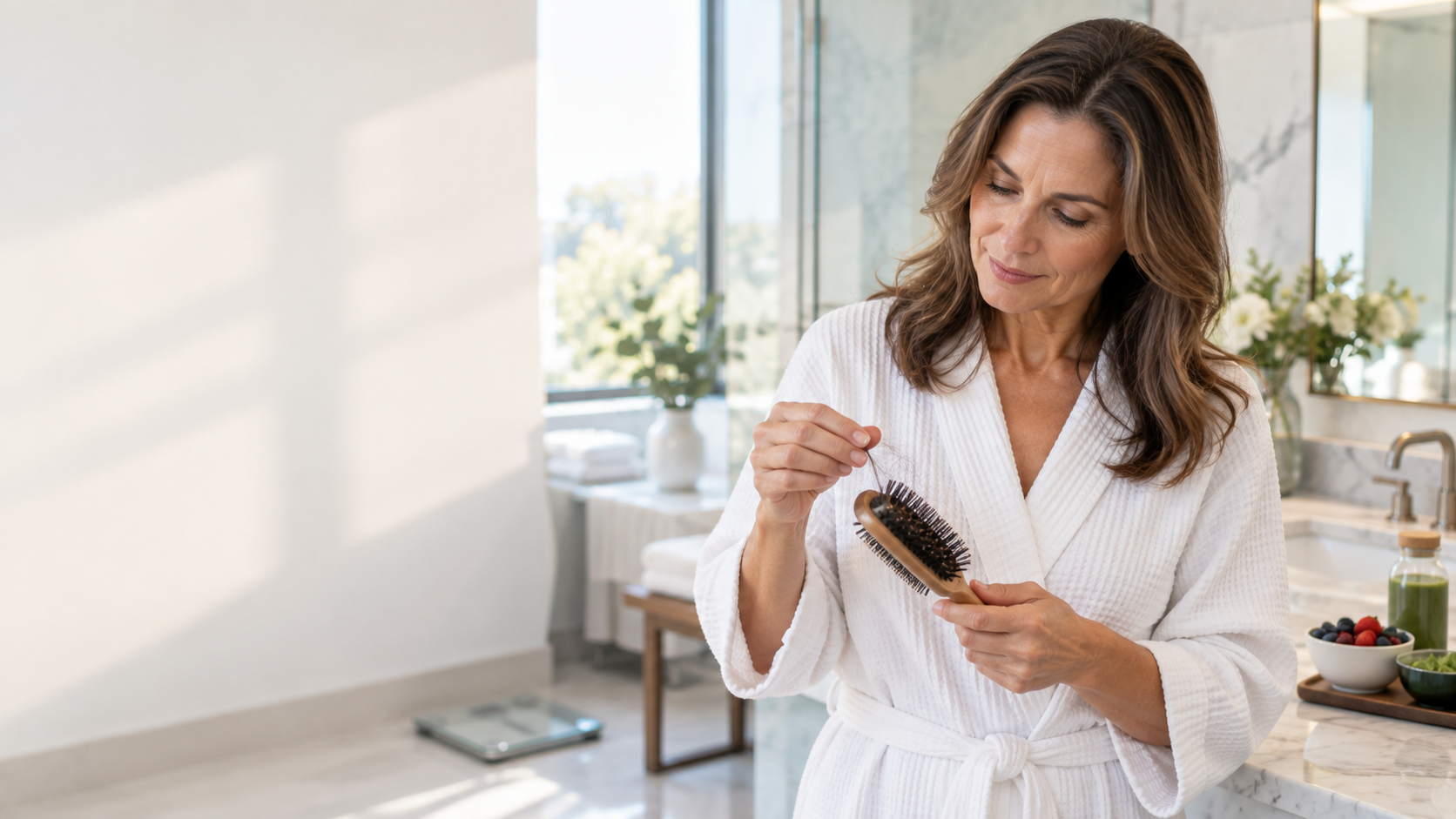
You reached a weight goal you are proud of, and then you noticed more hair in your brush. If that sounds familiar, you are not alone. Shedding after significant weight loss is more common than most people expect.
The good news is that this kind of hair loss is usually temporary. Understanding why it happens is the first step toward responding well.
Why Weight Loss Can Trigger Hair Shedding
Hair follicles naturally cycle through growth and rest phases. When your body goes through a significant change, whether from rapid weight loss, illness, or stress, a larger share of follicles can shift into the resting phase all at once.
A few months later, those resting hairs shed together. This pattern is known as telogen effluvium, and it is the most common reason people notice thinning after losing weight.
It can be unsettling to see, but it is your body adjusting rather than lasting damage. Most of the time, the follicles are still intact and capable of regrowing hair.
How Much Shedding Is Normal?
Some daily shedding is normal for everyone. After a big physical change, that number can rise noticeably, which is why it catches people off guard.
A modest increase that gradually settles is often part of the process. If the shedding is dramatic or continues for many months without slowing, it is worth having it evaluated rather than waiting it out.
The Role of Rapid Weight Loss
Many people lose weight quickly, and as the pounds drop, some notice the same kind of shedding described above. The trigger is generally the pace of the change, not any single cause.
A faster rate of loss tends to be a stronger trigger, which is why a physician-supervised program such as Health360 emphasizes steady, well-monitored progress. Gradual loss gives your body more time to adjust and places less stress on the system.
To learn more about how our physician-supervised program approaches steady weight loss, read about medical weight loss in Hilton Head.
Is the Hair Loss Temporary?
In the large majority of cases, yes. Once your body adjusts to its new rhythm and your nutrition stabilizes, shedding tends to slow, and regrowth begins.
The timeline varies from person to person. Some people see new growth within a few months, while others take longer. Being gentle with yourself during this window matters, because added stress can prolong the cycle.
Nutrition and Scalp Health During Weight Loss
Rapid weight loss can come with shortfalls in protein, iron, and certain vitamins, all of which support healthy hair. A balanced, nutrient-dense eating plan gives your follicles a better foundation.
Rather than guessing at supplements, it is worth reviewing your intake with a professional. This is another reason physician oversight matters when you are losing weight and noticing changes in your hair.
Small, steady habits also add up. Staying hydrated, eating enough protein, and not skipping meals during the day give your body less reason to treat hair as a lower priority.
Protecting Your Hair While You Lose Weight
Gentle handling goes a long way during a shedding phase. Avoid tight styles that pull on the roots, and go easy with heat tools while your hair is feeling fragile.
On Hilton Head, the sun and salt water are part of daily life. Rinsing after the beach and shielding your scalp from strong sun can help you avoid adding extra stress on top of the shedding.
Treatments That Support Regrowth at OneCareSpa
If you want to be proactive while your hair recovers, non-surgical options can help create a healthier scalp environment. Laser-based scalp treatments are one of the approaches we offer.
Dr. Andrew Binamira, a board-certified internal medicine physician with more than 26 years of experience, can help you sort out whether the shedding is a normal part of weight loss or something worth a closer look.
For a complete overview of these options, see our guide to hair restoration in Hilton Head SC.
When to Talk With a Physician
If shedding feels severe, drags on much longer than expected, or shows up alongside fatigue, brittle nails, or other changes, a medical evaluation is the sensible next step.
Sometimes hair loss has more than one cause, and treating the whole picture is what leads to real improvement. That is the kind of conversation we have every day at OneCareSpa, right here in the Lowcountry.
Frequently Asked Questions
Is hair loss after weight loss temporary?
In most cases, yes. Weight-loss-related shedding is usually temporary. Once your body adjusts and your nutrition stabilizes, hair typically regrows over several months.
Why does rapid weight loss sometimes cause shedding?
The shedding is usually tied to the speed of the weight change itself. Significant caloric changes and quick loss can push more follicles into a resting phase at once, which shows up as shedding a few months later.
How long does weight-loss-related shedding last?
Shedding often peaks a few months after the weight change begins and then gradually slows. Many people notice regrowth within six months or so, though timelines vary.
Will taking supplements stop the shedding?
Supplements can help if you have a specific deficiency, but they are not a guaranteed fix. It is best to have your nutrition and any underlying causes reviewed by a physician.
When should I see a doctor about hair loss after weight loss?
If shedding feels severe, lasts longer than expected, or comes with other symptoms like fatigue or brittle nails, a medical evaluation is a sensible next step. Dr. Binamira can help identify what is going on.
Get Support for Your Hair Journey
Schedule a consultation at OneCareSpa to discuss hair loss after weight loss with our physician-supervised team.
(843) 342-3202
81 N Main St, STE 202, Hilton Head Island, SC 29926
Book a Consultation